The core idea Whir mixer
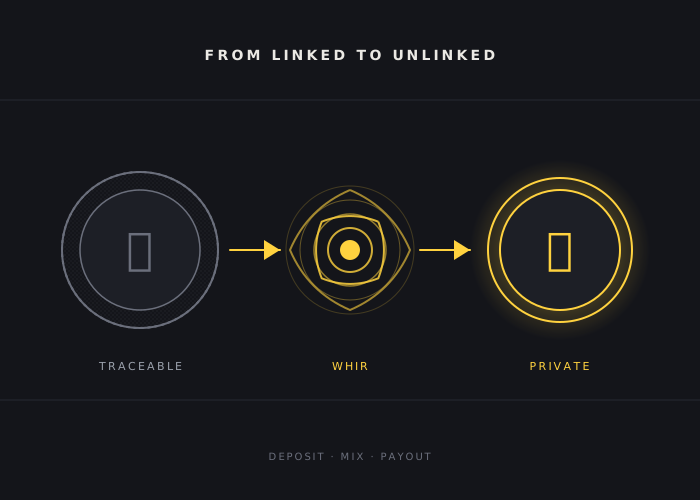
The Whir BTC mixer separates the deposit and the payout into two transactions that share no on-chain ancestry. Between them sits a Lightning-routed transfer that carries the value off-chain. Because chain-analysis heuristics rely on shared inputs and traceable spending patterns, severing that link is what makes the payout look unrelated to the deposit — the central job of any Bitcoin mixer worth using.
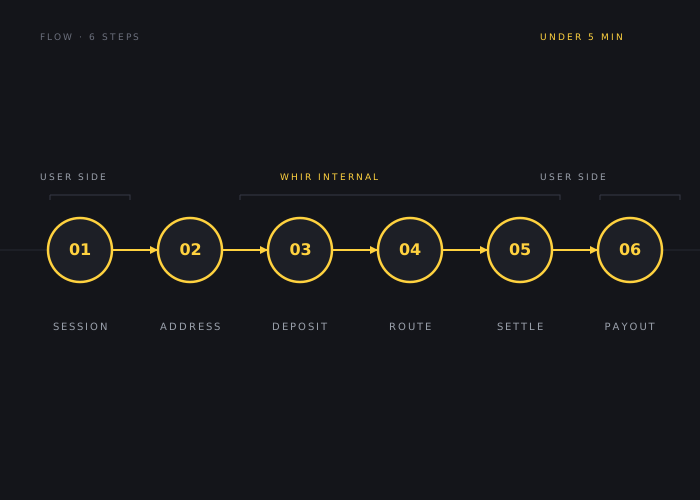
Step 1 — Open a session
A user opens the Whir interface, ideally over the Tor hidden service. No account is created. The mixer issues a fresh session identifier kept only in memory.
Step 2 — Set the payout address
The user provides one or more payout addresses, optionally split across percentages. The mixer commits to those details with a signed letter of guarantee, verifiable against the operator's published public key.
Step 3 — Send the deposit
A one-time deposit address is generated for the session. The user sends Bitcoin to it. The mixer waits for the chosen confirmation count — usually one to three confirmations depending on the amount.
Step 4 — Lightning routes the value
Once the deposit confirms, the mixer routes the equivalent value across Lightning channels internally. Routing takes seconds, costs a fraction of a percent, and leaves no trace on the Bitcoin base layer.
Step 5 — Settle from unrelated UTXOs
The Whir Bitcoin mixer holds a working set of unspent outputs unrelated to incoming deposits. The payout is built from these UTXOs. Because they share no input ancestry with the deposit, common clustering heuristics do not link the two transactions.
Step 6 — Clean payout
The payout transaction is broadcast and confirms on-chain like any other Bitcoin payment. The session record is dropped from memory at this point.

Why Lightning matters
Lightning is the unsung hero of the mixing. Classic BTC tumblers had to maintain a large on-chain pool to mix coins, which created custody risk and gave chain analysts something to study. The Lightning mixer model replaces that pool with off-chain channels. The effective pool becomes the entire Lightning Network — far larger and harder to enumerate than any single operator's wallet.
Important. No crypto mixer turns already-published information private. If a deposit comes from a KYC exchange, the exchange's record of that transfer still exists. Whether you mix Bitcoin through Whir or any other tool, privacy starts at the mix, not before it.
What the payout looks like on-chain
Unlike a CoinJoin transaction, which has a distinctive multi-input multi-output shape that chain analysts can flag, the Whir mixer payout looks like a generic Bitcoin payment. A handful of inputs, one or a few outputs, no unusual amount patterns. To a passive observer it does not advertise the use of a privacy tool.
Where the trust window sits
For the few minutes between deposit confirmation and Lightning payout, the operator holds funds. That is the trust window. It is short, but it is real, and any honest description of a BTC mixer has to name it. The mitigation is the letter of guarantee issued at session start, which makes the commitment publicly verifiable.
Next: the security model